What Is Net Metering?
Net metering is a billing mechanism that allows solar panel owners to receive credit for electricity they export to the grid. When your solar panels generate more electricity than your home is currently using, the surplus flows back through your meter to the public grid. Your electricity provider tracks this export and applies it as a credit against your bill — effectively letting your meter run backwards.
The concept has been adopted in different forms across more than 100 countries. The basic principle is consistent: homeowners who generate clean energy reduce their dependence on the grid and receive a credit for the value they contribute to it.
Net Metering in Singapore: It Is Called the Net Energy Rebate (NER)
In Singapore, the official term is not "net metering" — it is the Net Energy Rebate (NER). The NER is administered by SP Group under the framework set by the Energy Market Authority (EMA). The scheme has been available to residential solar system owners for over a decade and remains the primary financial incentive for rooftop solar in Singapore.
If you have searched for "net metering Singapore" and are trying to understand how it applies to your home, the NER is exactly what you are looking for. Everything in this article applies to the NER scheme.
For detailed 2026 NER credit rates, worked savings examples by system size, and the step-by-step application process, see our complete Net Energy Rebate guide.
How Net Metering Works: Step-by-Step Electricity Flow
Understanding what physically happens to your electricity makes net metering easier to work with:
- Solar generation begins — From around 7 AM, your panels start generating DC electricity. Your inverter converts it to AC for household use.
- Home uses solar first — All electricity your home needs in real time is drawn from your panels. Your SP meter records zero grid import during these periods.
- Surplus flows to the grid — When panels produce more than your home is using (commonly between 9 AM and 3 PM), the excess travels through your bi-directional meter back onto the national grid.
- SP Group records the export — Your bi-directional meter separately tracks kilowatt-hours exported. SP Group applies a credit to your account for each kWh sent to the grid.
- Evening and overnight: grid draws on credit — Once solar generation stops, your home draws electricity from the grid normally. Your NER credits offset this consumption on your bill.
- Monthly bill calculation — SP Group calculates your net electricity usage: grid imports minus NER credits. If credits exceed imports in a given month, the surplus generally carries over to the following billing cycle.
How Your Bill Is Calculated
Your billing scheme depends on whether you are a Non-Contestable or Contestable Consumer:
| Consumer Type | Who This Is | Scheme | How Credits Work |
|---|---|---|---|
| Non-Contestable Consumer (NCC) | Most residential homeowners (typically those buying electricity from SP Services at the regulated tariff) | Simplified Credit Treatment (SCT) | Credits automatically offset your SP electricity bill each month |
| Contestable Consumer (CC) | Higher-consumption homes or those on Open Electricity Market plans | Enhanced Central Intermediary Scheme (ECIS) | Credits settled at the prevailing half-hourly wholesale energy price via your chosen retailer |
The majority of Singapore landed-home solar owners are non-contestable consumers on the SCT scheme. This is the simpler and more predictable option. For the full comparison including current 2026 rates, see our NER guide.
What Affects Your Net Metering Earnings
Four factors drive how much you earn from net metering:
- System size (kWp): A larger system generates more electricity and creates more exportable surplus. Most Singapore landed homes install 8–15 kWp systems.
- Self-consumption ratio: The proportion of solar you use directly versus export. Higher self-consumption maximises bill savings; higher export maximises NER credits. Typical Singapore homes self-consume around 60–70% of their solar generation.
- NER credit rate: Pegged to SP Group's regulated electricity tariff, reviewed quarterly. As tariffs rise, your credits become more valuable. Current 2026 rates are covered in detail in the NER guide.
- Roof performance: Orientation, shading, panel quality, and cleanliness all affect how much electricity your system generates in the first place. For an assessment of your roof, see our roof suitability guide.
Benefits of Net Metering for Singapore Homeowners
- Reduced electricity bills: Credits from exported solar offset what you owe SP Group each month.
- Increased energy independence: You generate your own clean electricity and rely less on the grid for daytime consumption.
- Environmental contribution: Every kWh of solar you generate reduces demand on fossil-fuel generation and lowers Singapore's carbon emissions.
- Supports national goals: Singapore has set an ambitious target of 3 GWp of solar capacity by 2030. Residential rooftop solar is a meaningful contributor to this goal.
Net Metering vs. Solar Battery — What Is the Difference?
Net metering and battery storage are often discussed together but they address different goals:
| Net Metering (NER) | Solar Battery Storage | |
|---|---|---|
| What it does | Monetises surplus electricity by exporting it to the grid | Stores surplus electricity on-site for later use |
| When useful | You generate more than you consume and want credit for the surplus | You want to use your own solar at night instead of drawing from the grid |
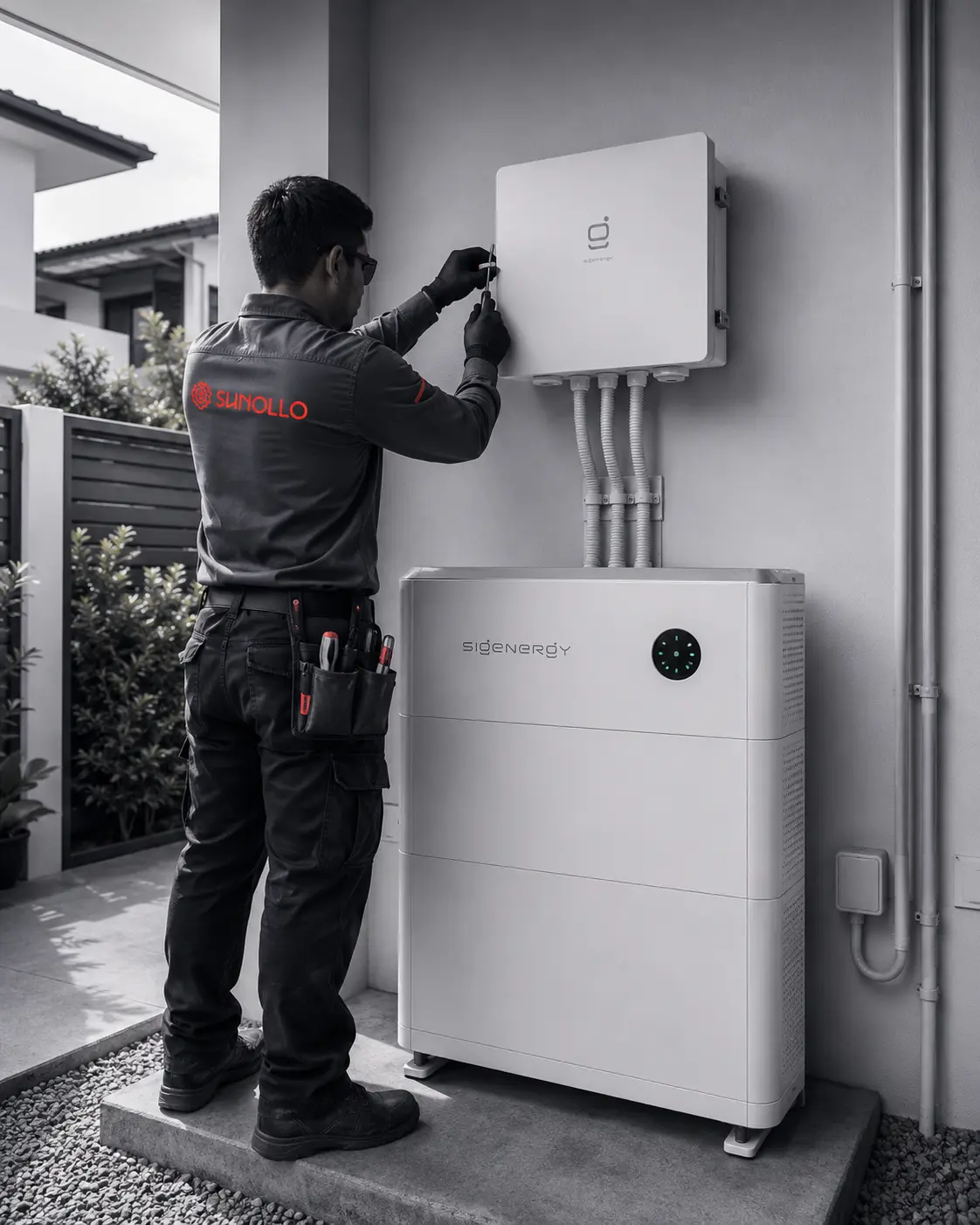
| Infrastructure needed | Bi-directional meter (installed by SP Group as part of your solar connection) | Battery unit plus hybrid inverter |
| Typical upfront cost | Generally no additional cost beyond standard solar installation | Approximately S$7,000–S$22,000 depending on capacity and brand |
| Best for | Maximising return on daytime surplus generation | Reducing evening grid consumption; backup power during outages |
In practice, the two are complementary. A solar-only system exports surplus and earns NER credits during the day. A solar-plus-battery system self-consumes more during the evening, exporting less — but captures more value per kWh because self-consumed solar is worth the full retail tariff versus the NER export rate. For a full comparison of options, see our Solar Battery Storage Singapore guide.
Common Misconceptions About Net Metering in Singapore
"I get paid cash for my surplus electricity."
NER credits offset your electricity bill rather than resulting in a cash payment or cheque. If credits exceed your bill in a given month, the surplus is generally carried forward to the following billing cycle.
"I need to apply separately for net metering after my solar installation."
In most cases, no. Your solar installer typically handles the EMA generation licence application and SP Group metering application as part of the standard installation process. You will receive a bi-directional meter as part of the commissioned system.
"Net metering and NER are different things in Singapore."
They are not. NER (Net Energy Rebate) is Singapore's term for what most of the world calls net metering. The mechanism is the same: export surplus solar to the grid, receive credits on your bill.
"Unused NER credits expire at the end of the month."
Credits generally carry over to subsequent billing cycles under current SP Group policy. It is worth confirming the latest credit carryover terms with SP Group or your installer, as policy details can change.
Frequently Asked Questions
How long does it take for solar panels to pay for themselves in Singapore?
For a purchased system, the payback period is typically around 6–8 years at current tariff rates and installation costs. Some installers offer S$0 upfront subscription models where your savings from day one are structured to exceed the monthly subscription fee. For detailed payback scenarios, see our Solar Panel Cost Singapore 2026 guide.
Are there any additional fees to participate in net metering?
Generally, no additional fees are charged for participating in the NER scheme beyond standard solar installation and metering costs. Confirm the current position with your installer and SP Group before signing.
Can I sell excess solar energy to my neighbours directly?
Not under the current NER scheme. You export surplus electricity to the national grid via SP Group. Peer-to-peer energy trading is not currently available for residential consumers in Singapore, though this is an area of ongoing policy development.
What happens if I generate more electricity than I consume in a month?
NER credits generally carry over to the following billing cycle under current SP Group policy. Confirm the latest carryover terms with SP Group if this is likely to be a regular occurrence for your system size.
Is there a size limit on the solar system that can participate?
There is no hard cap on system size for standard residential NER participation. Larger systems typically produce more exportable surplus. For very large systems (above 1 MWac), additional EMA licensing requirements apply — well above any standard landed-home scale.
For current 2026 NER credit rates, detailed worked examples by system size, and the step-by-step application guide, see our complete Net Energy Rebate guide for Singapore. For a full breakdown of solar costs and payback periods, see our Solar Panel Cost Singapore 2026 guide.
Related Articles: Singapore Green Plan 2030 | Solar Installation Step-by-Step | Net Energy Rebate Guide